Your net session coach sees you once a week. Coach Arjun sees every single delivery you've ever uploaded — and remembers all of it. He knows your action got worse in Phase 2 before it got better. He noticed when your front-foot stride finally moved into range. He adjusts what he focuses on based on what's already been fixed. A coach who actually knows where you've come from.
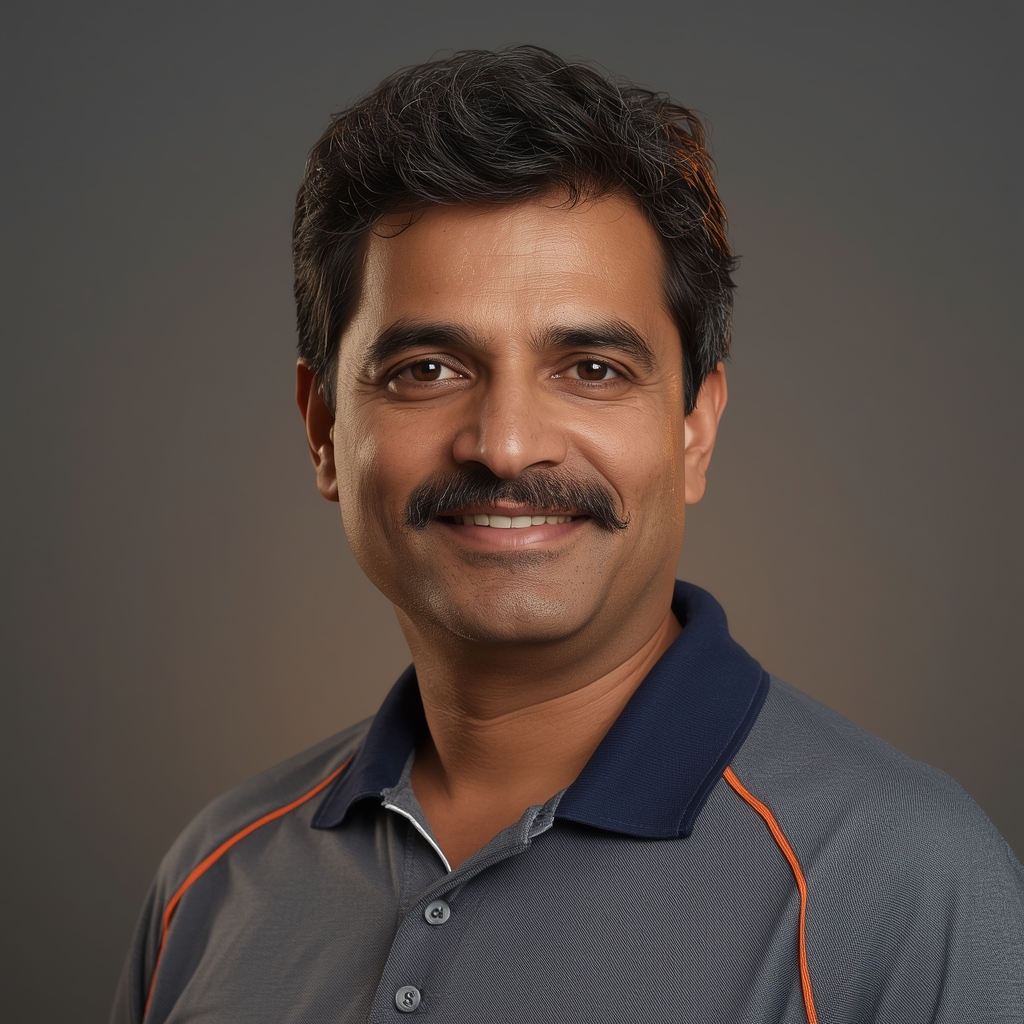
Most analysis tools give you a report and leave you alone. Coach Arjun engages with your action across sessions — noticing patterns, tracking what changed, and knowing when to push harder and when to hold focus on what's already working.
A good coach doesn't overwhelm you. Coach Arjun reads the full analysis and picks the one thing that will move the needle most this session. Not eight flags. One priority. One set of drills. That's it.
Coach Arjun doesn't give you numbers and leave you to figure out what they mean. He tells you what to do at your next session, in the same language your coach uses at the ground.
Re-upload after training and Coach Arjun compares your numbers. Celebrates what improved. Recalibrates his focus. Every note is informed by your history — not generic advice.
The knowledge behind each note comes from peer-reviewed cricket biomechanics research — including Loughborough University's programme with the England & Wales Cricket Board (since 2004), Cricket Australia's injury surveillance studies, and research published in the Journal of Sports Sciences and British Journal of Sports Medicine. The language it's written in comes from cricket — not a lab.
No booking. No waiting. Upload after any session, and Coach Arjun's note is ready before your next one. Every upload gets a full, personalised response — not a template.
Coach Arjun isn't just a note — he's a conversation. Once your analysis is ready, you can ask him anything about it directly in the app: what a metric means, why a flag appeared, how to work the drills, what to focus on at tomorrow's nets. Every answer is grounded in your actual session data.
Every analysis includes a letter grade (A+ to D) alongside the 0–100 score. Every metric shows where you sit relative to the real player cohort — so you know not just that a flag exists, but how significant it is. The Kinogram shows the four key phase frames side-by-side with skeleton overlay — the visual ground truth behind every measurement.
Coach Arjun isn't a replacement for your existing coach — he's a second voice, grounded in data. His notes are designed to be shared with your coach and physio to create better conversations.
Before writing a single word, Coach Arjun analyses every phase score, every flag, every metric value, and every injury cluster. He understands your full picture — not just the headline numbers.
Of everything flagged, Coach Arjun identifies the root cause — the upstream issue that, if fixed, will resolve the most downstream flags. He focuses your attention where the leverage is highest.
One clear, specific, actionable note. What's working. What needs work. Exactly why it matters for your cricket. Three priority drills to act on this week. Ready to share with your coach.
These are actual notes from real CricMotion analyses — exactly as written.
"Bowler, biggest fix this session is in your delivery stride: rear-knee angle at release — 123°, noticeably bent. Sort that one and most of the rest settles down. Your run-up is 100/100 — elite, keep reinforcing. Bring this clip to your next net session. Ask your coach to focus on the delivery stride — that's where most of the gain lives this week. Re-upload after two sessions. — Arjun Sir"

"Biggest fix is your front-foot stride in the downswing — currently 16% of your height, target is 35-55%. That's the root cause: when the stride is short, the knee can't flex properly at impact, and your head ends up 19cm outside the front knee. Fix the stride first and most of this resolves. Top-arm elbow at 167° is strong — build from that. Three drills below, priority order. Re-upload after two sessions. — Arjun Sir"

Every flag, every cluster, every coaching cue is grounded in published cricket biomechanics research — not opinion, not guesswork.
74% of release-speed variance explained by four measurable factors: run-up speed, front knee straightness, upper-trunk flexion, arm circumduction timing.
A two-marker model — rear hip flexion at BFC + lumbopelvic flexion at FFC — predicts 88% of LBSI cases (97% sensitivity for injured bowlers).
Controlled arm deceleration (500-700ms window) and correct follow-through path are linked with significantly reduced cricket-shoulder injury incidence.
Athletic stance requires: width 25-40% of height, weight 50-60% back foot, front-knee flex 15-25°, back-elbow flex 80-110°.
66% of bat-speed variance is explained by two factors: backlift height and front-foot stride length — the metrics Coach Arjun prioritises for power hitters.
World-class batters use predictive saccades to track ball flight. Head-over-front-knee offset at impact is a key proxy for optimal tracking position.
Three batting injury pathways measured: hamstring strain (stance/stride patterns), cumulative lumbar load, and lateral epicondylitis linked to improper mechanics and bat weight. Coaching consensus on marker-to-pathway mapping; dose-response not yet established in batting-specific literature.
Every metric is compared against CricMotion's real player cohort — so a raw angle becomes a relative position among peers, not just a number against a target band.
Upload your first video. Coach Arjun analyses your action and your note is ready before your next session. Free. No card.