India produces more cricket talent per square kilometre than almost any country on earth. It also concentrates its coaching infrastructure in a handful of cities. The NCA is in Bengaluru. Elite academies cluster in Mumbai, Delhi, Hyderabad. The biomechanics labs — if they exist at all — are inside facilities that grassroots players will never enter.
A fast bowler in Ranchi, Vizag, or Indore who can genuinely bowl 130 km/h has almost no access to the analytical support that an equivalent player in a metro programme takes for granted. This is not a coaching quality problem. It's an access problem. And AI is starting to solve it.
The access gap
The difference between an elite programme and a grassroots academy is not talent identification — it's measurement. Elite programmes measure objectively. Grassroots coaches measure by eye. AI closes this gap with one phone video.
What elite programmes have always had
At the NCA and in state academy programmes, biomechanics analysis has been part of the toolkit for years — high-speed cameras, reflective markers, force plates, specialist analysts. A genuinely promising fast bowler gets their action analysed phase by phase. The data informs drilling, injury prevention, load management. This is not magic. It's measurement.
The measurement was simply too expensive and too geographically concentrated to scale beyond elite programmes. A serious biomechanics session costs ₹50,000–2,00,000. It requires travel to a major city. It requires booking weeks in advance.
What AI coaching actually does
AI cricket coaching is not a chatbot dispensing generic tips. Done properly, it is computer vision and machine learning applied to the specific biomechanical patterns in your action — measured against research-backed reference ranges, compared session over session, and translated into coaching language a player can act on. Importantly, reference ranges in biomechanics are not one-size-fits-all: a front-knee angle that's appropriate for an adult fast bowler is different from what's expected of a 13-year-old still developing physically. CricMotion's cohort benchmarking uses age and skill level as part of the comparison, so a young player is assessed against relevant peers — not against international standards they haven't yet grown into.
CricMotion's approach: upload a side-on video from any smartphone. Computer vision tracks every joint across every frame. Every phase of the action is measured — run-up through follow-through — with root cause identified and injury clusters surfaced. The AI generates three specific drills. Coach Arjun then reads the full analysis and writes a personalised coaching note in plain cricket language.
The grassroots opportunity
The coach in a Tier 2 city who has been coaching for 20 years has seen thousands of actions. They know what they're looking for. What they've never had is the instrument to measure what they see, track whether it changes, or identify the root cause systematically across a full squad.
For the player in a Tier 2 city, it means access to the same quality of analysis that a state academy player gets — at a fraction of what a single net coaching session costs. See pricing →
Made in India — what it actually means
CricMotion is built from the ground up for Indian cricket — the infrastructure, the coaching culture, the tournament calendar, the grassroots-to-elite pathway, and the budget reality of an aspiring cricketer in a non-metro city. The pricing is in rupees. Coach Arjun speaks like an Indian cricket coach. The analysis workflow assumes a smartphone camera, not a high-speed lab camera.
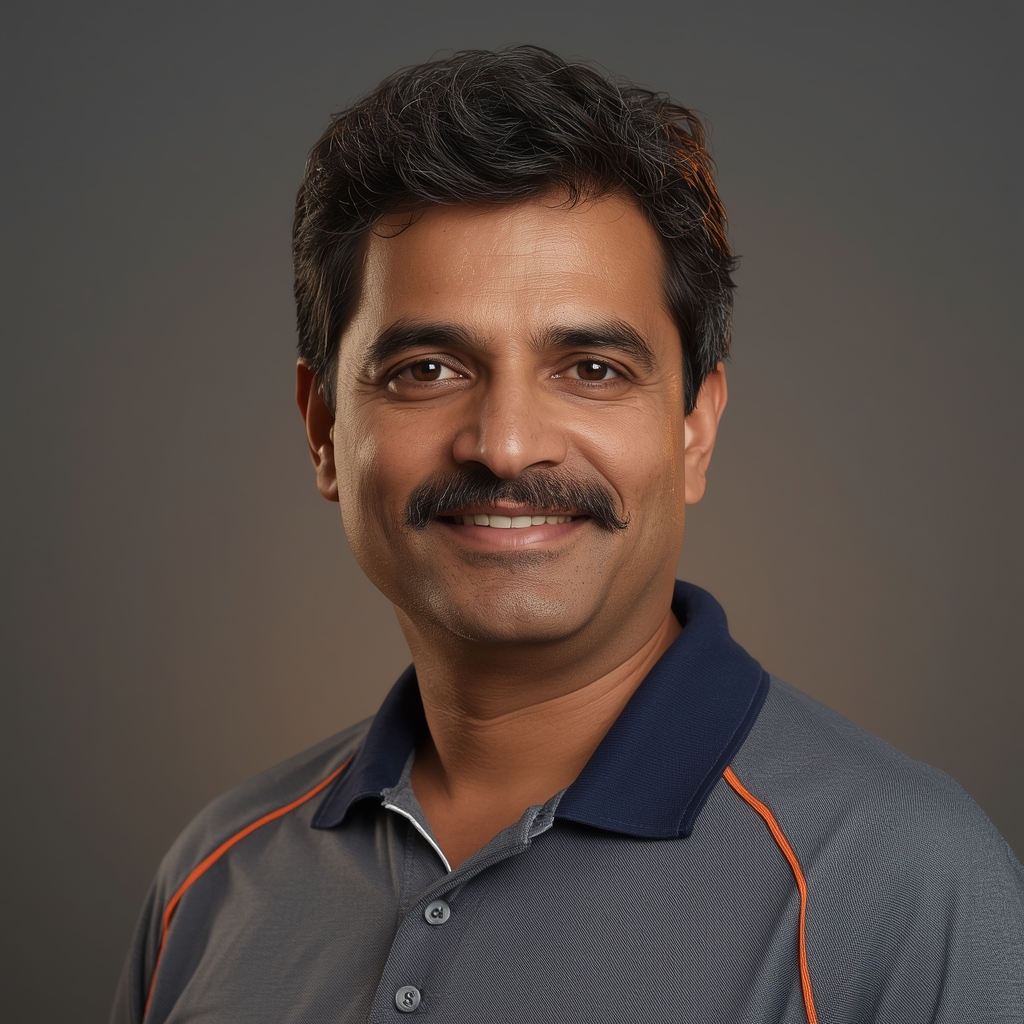
"I've looked at analyses from players in Bengaluru, Nagpur, Vizag, Kanpur. The talent is everywhere. The access wasn't. Every analysis I write is for the player who couldn't walk into an NCA lab — but has the same right to know what their action actually does. — Arjun Sir"
How coaches use AI analysis — in practice
For a coach, the most immediate value of AI analysis is confirmation and precision. A coach who has worked with a bowler for three months often has a feeling about what's wrong — the front arm is lazy, the back knee is collapsing, the release point is drifting. What they haven't had is the instrument to prove it, measure it, and show the player the number.
When a coach runs a CricMotion analysis and sees a knee collapse delta of 22° flagged at four standard deviations above the population average — that's not a feeling anymore. It's a measurement. It becomes the anchor for the conversation with the player, the drill prescription, and the re-analysis six weeks later to check whether it shifted. AI analysis doesn't replace the coach's eye. It gives the coach's eye a unit of measurement.
For players without access to a coach at that level, the analysis serves a different function: it provides the structured feedback that regular net sessions alone can't. A player drilling in an academy without specialist biomechanics input gets better through repetition — but repetition of an uncorrected flaw compounds the problem. One analysis session that identifies the root cause can redirect months of practice.