Fast bowling is one of the most physically demanding actions in sport. In the half-second it takes to deliver a ball at 130+ km/h, your body generates ground reaction forces of 8–10 times your body weight through the front leg, rotates the trunk at speeds that exceed most other sports, and decelerates the bowling arm from full extension through an enormous range of motion.
The muscles required to produce, control, and safely express this action are specific — and most grassroots fast bowlers are systematically weak in the areas that matter most. This isn't a gym article. It's a biomechanics article that happens to end in the gym.
The Four Muscle Groups That Run the Bowling Action
1. Glutes and Hip Extensors — The Power Source
The gluteus maximus and the hip extensor chain are the primary power generators in fast bowling. The explosive drive off the back foot into the bound, the bracing of the front leg at landing, and the rotational power that drives the hips ahead of the shoulders — all of these are primarily glute and hip extensor actions.
Most fast bowlers who bowl "with their arms" — generating pace through arm speed rather than body rotation — have underdeveloped glutes relative to their upper body. The arm compensates for what the hips aren't providing. The result: lower pace than their arm action suggests is possible, and much higher shoulder injury risk from overloading the arm.
Biomechanical sign of glute weakness: Limited hip-shoulder separation at back-foot landing. The hips don't drive ahead of the shoulders because they can't generate the rotational power needed. This shows up clearly in biomechanical analysis as a reduced hip-shoulder separation angle.
Strength work: Bulgarian split squats, hip thrusts, Romanian deadlifts, single-leg box jumps. All single-leg dominant — because bowling is a single-leg-dominant action.
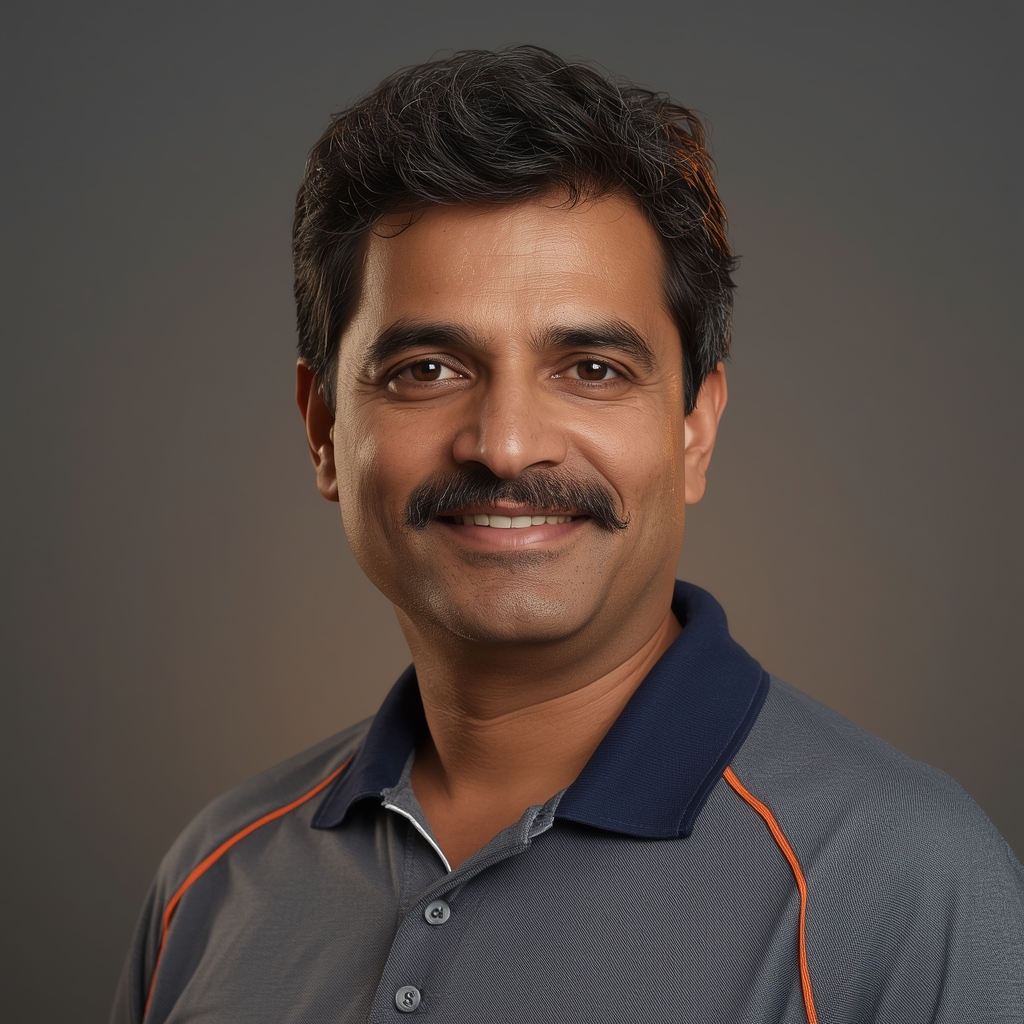
"If someone asks me which muscle group I'd fix first in a fast bowler to immediately improve pace and reduce injury risk — it's the glutes. No contest. Strong glutes drive the hips. The hips drive everything else. It's the engine of the bowling action."
2. Core — The Transfer Mechanism
The core (deep trunk stabilisers including the transverse abdominis, internal and external obliques, and multifidus) is not a power generator in bowling — it's a power transfer mechanism. The power generated by the lower body (glutes, quads, calves) must be transferred efficiently to the upper body (shoulder, arm, wrist). The core is the bridge.
A weak core doesn't just reduce pace — it's dangerous. When the core can't stabilise the spine under the rotational and compressive forces of fast bowling, the lumbar vertebrae absorb that instability. This is one of the primary contributors to lumbar stress fractures in young fast bowlers who bowl high volumes without adequate core conditioning.
Biomechanical sign of core weakness: The body visibly "buckles" at the trunk during delivery — either collapsing toward the bowling side or laterally bending away. In analysis, this shows as excessive trunk lateral tilt and reduced trunk stiffness through the delivery stride.
Strength work: Pallof press (anti-rotation), dead bugs, cable woodchops, plank variations with added load, medicine ball rotational throws. Prioritise anti-rotation and anti-extension movements — the core's job in bowling is to resist movement, not generate it.
3. Quadriceps and Knee Extensors — The Front-Leg Brace
The front-leg brace at landing is one of the most mechanically critical positions in fast bowling. The front knee must resist approximately 8–10 times body weight of compressive force in roughly 0.05 seconds. The primary muscle doing this job is the quadriceps.
Bowlers with weak quadriceps — particularly weak single-leg quad strength — cannot maintain a braced front knee under bowling loads. The knee collapses. This drops the release point, reduces pace, and increases lower back stress (because the hips drop, forcing the lumbar spine to compensate).
Biomechanical sign of quad weakness: Front knee angle at landing greater than 30 degrees of flexion (ideally less than 15 degrees). Visible knee collapse visible from side-on camera. Release point that drops from delivery to delivery as fatigue accumulates.
Strength work: Single-leg squats, step-ups with knee drive, Spanish squats, eccentric leg press. Single-leg emphasis — always. Bilateral squats are useful for general strength but don't replicate the single-leg load of bowling.
4. Rotator Cuff and Shoulder Decelerators — The Safety System
The shoulder's rotator cuff muscles (supraspinatus, infraspinatus, teres minor, subscapularis) are the brakes of the bowling action. After release, the bowling arm travels at 6,000+ degrees per second of internal rotation — and must be decelerated entirely by the posterior rotator cuff and scapular stabilisers. This is an enormous eccentric load, repeated thousands of times per season.
Rotator cuff weakness doesn't reduce bowling pace — it increases injury risk. The shoulder can still generate speed when the cuff is weak, but the deceleration phase becomes dangerous. Posterior shoulder tears, labral damage, and AC joint impingement are all associated with inadequate rotator cuff strength relative to bowling load.
Biomechanical sign of rotator cuff weakness: The follow-through terminates prematurely — the bowler stops their arm swing early because it's uncomfortable or painful to continue. This shortfall in follow-through is the arm's protection mechanism against an overloaded deceleration phase.
Strength work: External rotation with band or cable, prone Y-T-W, face pulls, serratus anterior activation (band pull-aparts), prone horizontal abduction. All low-load, high-repetition — the rotator cuff is an endurance muscle in bowling, not a power muscle.
📊 How CricMotion Flags Strength-Related Issues
CricMotion's AI doesn't test your strength directly — but it measures the biomechanical outputs that reveal strength deficiencies. Front knee collapse points to quad weakness. Limited hip-shoulder separation points to glute/hip weakness. Trunk lateral tilt points to core weakness. Short follow-through points to rotator cuff deficit. The report tells you what the dimension shows — and Coach Arjun connects the biomechanical finding to the physical work needed. Get your free analysis →
The Priority Order for a Young Fast Bowler
If you're a U-19 fast bowler starting a gym programme, here's the sequence that produces the best cricket outcomes:
- Core stability first (weeks 1–4). Before adding load anywhere, build the transfer mechanism. No point developing powerful glutes if the core can't transfer that power safely.
- Single-leg lower body strength (weeks 3–12). Bulgarian split squats, step-ups, hip thrusts. Build quad and glute strength in positions that mirror the bowling action.
- Rotator cuff conditioning (ongoing from day 1). Low load, high rep. This should be part of every training session throughout the season, not just off-season.
- Explosive power development (month 3+). Once the strength base exists, add plyometric and explosive work: box jumps, medicine ball rotational throws, bounding drills. Power is strength applied quickly — build the strength first.
Final Word
The fast bowler's body is a chain. Power starts at the ground (glutes), transfers through the core, is expressed through the shoulder (rotator cuff), and is released through the arm. A weak link anywhere in this chain either reduces pace or causes injury — usually both. Know your chain. Identify the weak link. Fix it before it breaks.
⚠️ AI-Generated Content Disclosure: This article was created with the assistance of artificial intelligence by the CricMotion team. Biomechanical references are grounded in established sports science research. Content is educational — not a substitute for qualified coaching or medical advice. © 2026 CricMotion. All rights reserved.